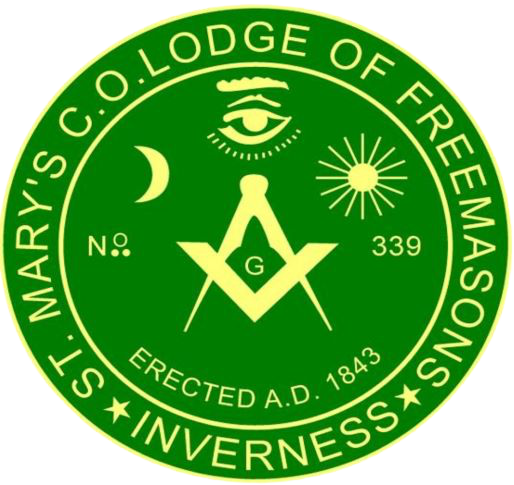
St Marys Victoria Cross Winners |

|

| Lance Corporal Robert Gordon
McBeath He was Initiated into Freemasonry in Lodge St. Mary's Caledonian Operative, No.339, (Inverness, Scotland) on 12 July 1919. He did not take all his Masonic degrees in Scotland. After his arrival in Canada, he completed his degrees in Mount Hermon Lodge, No. 7 (Vancouver, Canada) in which he was Passed on 29 October 1921 and Raised on 18 May 1922 He joined the British Columbia Provincial Police. On 12 August 1921, he joined the Vancouver Police Department. On 9 October 1922, while walking the beat on Granville and Davie Streets with his partner, Detective R Quirk, he stopped and arrested a man named Fred Deal for impaired driving. While escorting the prisoner to the nearest call-box, the man pulled a handgun from his pocket and shot both officers; McBeath's partner survived, but McBeath died almost instantly. He was 23 years old. |
Robert McBeath, VC, 1/5th Battalion, Seaforth Highlanders, was born at Rosehearty, Aberdeenshire, in 1898. At a young age he was adopted by Robert MacKenzie and his sister Barbara MacIntosh, and grew up in Kinlochbervie. Aged just sixteen, Robert lied about his age and was accepted into the Seaforth Highlanders. | CITATION READS On 20 November 1917 during the Battle of Cambrai in France, McBeath volunteered to deal with a nest of machine-gunners that checked the advance of his unit and which had caused heavy casualties. He moved off alone, armed with a Lewis Gun and a revolver. Finding that several other machine-guns were in action, McBeath attacked them with the assistance of a tank and drove the gunners to ground in a deep dug-out. McBeath rushed in after them, shot the first man who opposed him and then drove the remainder of the garrison out of the dug-out. He captured three officers and 30 men. |
 |
James Dalgleish Pollock (1890-1958) was born at 24 Ochil Street, Tillicoultry, Clackmannanshire, Scotland on 3rd June 1890. His father was Hugh Pollock, a wool sorter and later a journeyman dyer. His mother was Margaret "Maggie" Helen nee Dalgleish, a factory worker before her marriage on 11th September 1885 at 56 Albert Place, Stirling. When James was two, the family moved to Montgomeryshire in Wales, where four of the children were born between 1892-1899. Sadly, James' father died in 1900, and his mother and the children returned to Tillicoultry. In all, James was one of six children, and two of his brothers also served in the Great War, though sadly his youngest brother George was killed in action in 1918 and is buried in St Sever Cemetery, Rouen |
James Dalgleish Pollock VC enlisted in Glasgow on 5th September 1914, declaring two and a half years previous service with 5th Cameronians, a Territorial Force unit, presumably when working in Glasgow from 1910-1912. He was promoted to Lance Corporal on 24th October and Corporal on 18th November and went to France on 10th May 1915 His second cousin, Corporal James Lennox Dawson, was also awarded the VC for his actions at Hohenzollern Redoubt just sixteen days after James. While recuperating from his wounds at the Royal Victoria Hospital in Belfast, he was held on the strength of the Depot from 2nd October and transferred to 3rd (Reserve) Battalion at Invergordon on 17th November. The VC was presented by King George V at Buckingham Palace on 4th December 1915. Having recovered from his wounds, he attended the Officer Cadet Battalion at Gailes in Ayrshire. He was commissioned into the 8th Reserve Battalion on 7th July 1916 and served in 6th Battalion. Appointed a Regular 2nd Lieutenant on 6th April 1917, he lost his left eye when a rifle grenade exploded prematurely later that month. He was promoted to Lieutenant the following January and was attached to the War Office in the Army List May 1918 to September 1919. James married Margaret Bennett on 26th February 1919 at St Andrew's Church, Ayr. They had met while he was at the Officer Cadet Battalion at Gailes in 1916. They had one daughter, Clara, born in 1928 in Hampstead, London. James paraded at Inverness when the Duke of York (later George VI) presented Colours to 7th and 9th Cameron Highlanders in September 1920. He worked for the Ministry of Munitions for a period before returning to France with the body responsible for disposing of war stock. He moved to Ayr and then to London in 1923, becoming a director of an importing company. He returned to Ayr in 1940 and around 1950 moved to Leicester, where he was secretary and director of Midland Hosiery Mills. He was a freemason, a member of St Mary's Caledonian Operative Lodge No 339. During World War Two, he served with the Royal Observer Corps as an observer lieutenant and was appointed Duty Controller in No 33 Aberdeen (Ayr) Group. He is understood to be the only ROC Officer to have held the VC. James died suddenly at Ballochmyle Hospital, Ayrshire on 10th May 1958, just three weeks after returning from a biannual business trip to Canada. He is buried in the Bennett family grave in Ayr Cemetery. | CITATION READS On 27th September 1915 near the Hohenzollern Redoubt, France, at about noon the enemy's bombers in superior numbers were successfully working up "Little Willie" Trench towards the Redoubt. Corporal Pollock, after obtaining permission, got out of the trench alone and walked along the top edge with complete disregard for danger, and compelled the enemy bombers to retire by bombing them from above. He was under heavy machine-gun fire the whole time, but contrived to hold up the progress of the Germans for an hour before he was at length wounded. In addition to his VC, he was awarded the 1914-15 Star, British War Medal 1914-20, Victory Medal 1914-19, Defence Medal 1939-45, George VI Coronation Medal 1937 and Elizabeth II Coronation Medal 1953. When he died, the medals passed to his daughter, now Mrs Clara Cottam, for her lifetime and then went to the Regiment. They are held by the Highlanders Museum, Fort George, Inverness |
George Cross Winner
 |
 |
| Frederick William "Fred" Fairfax (1917-1998) was born on 17th June 1917 in the Police Quarters, Westminster, London, the son of Harry and Minnie Fairfax (nee Field). His father was a serving Metropolitan Police Officer at the time of Fred's birth. Fred was educated at St Mary' School, Westminster and joined the 1st Westminster Wolf Cubs, and later became a Boy Scout. He also sang in the choir of St Stephen's Church in Rochester Row. At the age of 12, he earned a scholarship to Archbishop Temple School in Lambeth, where he was an excellent cricketer, footballer and boxer. Fred's ambition was to become a teacher, but his father was unable to afford to send him to college, so got his first job working for Westminster Bank, until he was old enough to apply to join the Police Force.
He joined the Police in June 1936 and after 13 weeks training became PC 1571 based at Peckham. In September 1940, he volunteered for military service and became an instructor in the Royal Corps of Signals. In 1941, he married Muriel Bevis, a childhood friend, and they had a son, Alan (who later became a policeman himself). Commissioned in 1942, he was posted to the Royal Berkshire Regiment, and in 1944, was transferred to Cameron Barracks, in Fort William, Scotland. While there he trained Army personnel. Fred was demobbed in 1945 with the rank of Captain. He then resumed his Police career in Brixton, before transferring to CID at Croydon.
|
On 2nd November 1952, in Croydon, two men were seen to climb over the side gate of a warehouse in Tamworth Road, and reach the flat roof of a building 22ft above. The alarm was raised and Fairfax, Constable Norman Harrison and some other officers went to the premises in a police van. At the same time Constable James McDonald and another constable arrived in a police car. Other officers took up positions around the building. When told the suspects had climbed up a drainpipe to the roof, Fairfax immediately scaled the drainpipe, followed by McDonald, but the latter was unable to negotiate the last 6ft and returned to the ground.
Fairfax reached the top and pulled himself onto the roof. In the moonlight he saw the two men about 15yds away behind a brick stack. He walked towards them and challenged them, and then, dashing behind the stack, he grabbed one of the men and pulled him into the open. The man broke away and his companion then shot Fairfax in the right shoulder. He then fell to the ground but as the two criminals ran past him, he got up and caught one of them, Derek Bentley, knocking him to the ground. A second shot was fired by the second man, Christopher Craig, but Fairfax held on, dragged Bentley behind a skylight and searched him. He found a knuckleduster and a dagger, which he removed from him. McDonald by this time had climbed onto the roof and called to the gunman to drop his weapon but he refused and made further threats. During this time Harrison had climbed onto a sloping roof nearby and was edging towards the gunman but he was seen and fired at, the shot just missing him. He continued his movement, however, and another shot was fired, which also missed. Harrison then got to the chimney stack and went back to ground level, where he joined other officers who had now entered the building. They ran up to the fire escape door on the roof and pushed it open. Fairfax warned them that the gunman was nearby but as Constable Sidney Miles jumped from the doorway on the roof, Bentley called out, "Let him have it." As he jumped, Craig shot Miles, killing him. Fairfax immediately left cover to bring in the casualty and was shot at. McDonald also came forward and the two men dragged Miles behind the fire escape exit.
Harrison then jumped out on to the roof and, standing in the doorway, threw his truncheon at the gunman, who again fired at him. Constable Robert Jaggs then reached the roof and was also fired at. Fairfax, helped by Harrison, pushed Bentley through the doorway and handed him over to the other officers. Fairfax was then given a police firearm and returned to the roof. He jumped through the doorway and again called for Craig to drop his weapon. A further shot was fired at him, but he advanced at Craig opening fire. Craig jumped off the roof to the ground below, where he was arrested. Much debate then raged over the actions of Bentley and Craig following their arrests.
At the time of the incident, Christopher Craig was 16 and Derek Bentley was 19. At the trial, at which Fred Fairfax was a key witness for the prosecution, both Craig and Bentley were found guilty of murder. Due to their ages, Bentley was sentenced to death, and was hanged on 28th January 1953 in Wandsworth Prison, whereas Craig, who was underage, was sentenced to 10 years. He was released in 1963.
On 6th January 1953, it was announced in the London Gazette that Fred Fairfax was to be awarded the George Cross, Norman Harrison and James McDonald awarded the George Medal. Robert Jaggs awarded the British Empire Medal, and Constable Sidney Miles posthumously awarded the Queen's Police Medal. On the same day as the announcement, Fred was promoted to Detective Sergeant. He was then transferred to Savile Row, Stretham and finally back to Croydon before retiring in 1962.
In retirement, he opened a tobacco and confectionary shop in Shirley. However, following a number of requests for his detective skills, he sold the shop and set up his own Private Investigation business. It was called Fairfax Investigators Ltd and was extremely successful, until he sold the business in 1980. He and Muriel had moved down to Dorset at this point, he became heavily involved in the local church, being the organist, church warden and a member of the Church Council. He also spent time as a ABA boxing judge, and was an active freemason.
Fred Fairfax passed away on 23rd February 1998 in Yeovil, Somerset. Following a funeral service on 2nd March, he was cremated and his ashes were interred in the grounds of St James the Great Church, Longburton, Dorset. When his widow Muriel passed away in 2003, her ashes were interred with him. Fred's medals including his GC, Defence Medal 1939-45, 1953 QEII Coronation Medal, 1977 QEII Silver Jubilee Medal and Police Long Service & Good Conduct Medal are privately held.
Shortly after Fred's death, on 30th July 1998, the Court of Appeal set aside Derek Bentley's conviction for murder, following a 45 year campaign by his sister, Iris. In July 1993, she had achieved a royal pardon in respect of the sentence of death but under English law this didn't quash his conviction, so the 1998 Court of Appeal verdict finally did so.
LOCATION OF MEDAL: PRIVATELY HELD.
BURIAL PLACE: ST JAMES THE GREAT CHURCH, LONGBURTON, DORSET. (ASHES INTERRED)
|